
Ulnar Nerve Injury: Symptoms, Causes and Treatment Options
Written and medically reviewed by Dr Dinesh Sirisena
Consultant in Sports, Exercise & Musculoskeletal Medicine · Triaxis Sports & Joint Clinic, Farrer Park Hospital, Singapore
In short: Ulnar nerve injury — most commonly cubital tunnel syndrome — occurs when the ulnar nerve is compressed or irritated, usually behind the inner elbow. It causes tingling and numbness in the ring and little fingers, sometimes with hand weakness. Most people improve without surgery through activity modification and rehabilitation, and ultrasound-guided hydrodissection offers a minimally invasive option where the nerve remains compressed.
Key points at a glance
- The ulnar nerve runs from the neck to the hand, passing through a narrow tunnel behind the inner elbow.
- Tingling and numbness in the ring and little fingers are the hallmark symptoms.
- Prolonged elbow bending and leaning on the elbow are the most common aggravators.
- Ultrasound shows the nerve directly — its size, its position and what is compressing it.
- Most people improve without surgery with activity modification and rehabilitation.
- Ultrasound-guided hydrodissection is a minimally invasive option that releases the nerve without open surgery.
- Progressive weakness or muscle wasting in the hand changes the urgency — seek assessment promptly.
What is an ulnar nerve injury?
Ulnar nerve injury is irritation, compression or damage to the ulnar nerve, most commonly where it passes through the cubital tunnel behind the inner elbow — the spot responsible for the “funny bone” sensation.
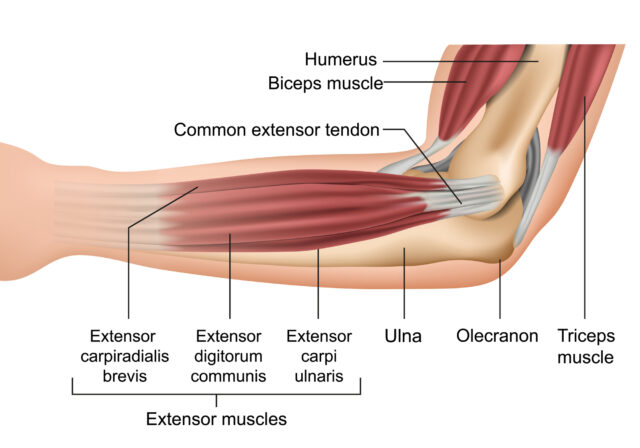
The ulnar nerve is one of the three major nerves of the arm. It supplies sensation to the little finger and half the ring finger, and powers many of the small muscles that control fine hand movements and grip.
Because the nerve sits close to the surface at the elbow and stretches every time the elbow bends, it is vulnerable to pressure and repetitive strain at this point. Less commonly, it can be compressed at the wrist (Guyon’s canal) or irritated higher up.
What does an ulnar nerve injury feel like?
The classic pattern is tingling or numbness in the ring and little fingers, often worse with prolonged elbow bending — phone calls, sleep, desk work — sometimes with aching at the inner elbow and weakening grip.
Common symptoms include:
- Tingling or numbness in the ring and little fingers
- Symptoms worse when the elbow is bent for long periods, including during sleep
- Aching or sensitivity on the inner side of the elbow
- Weakness of grip or pinch
- Clumsiness with fine tasks — buttons, keys, chopsticks
- In advanced cases, visible thinning of the hand muscles
What causes ulnar nerve injury?
Sustained pressure and repetitive stretch are the usual causes — the nerve is compressed and elongated every time the elbow bends fully.
Common contributors include:
- Prolonged elbow flexion — phone use, sleeping with bent elbows, desk posture
- Leaning on the elbows — desks, armrests, cycling
- Repetitive bending in sport or manual work
- Direct trauma, fracture or previous elbow injury
- A nerve that subluxes (flicks) over the bone with movement
- Elbow arthritis or swelling narrowing the tunnel
Who is more likely to develop it?
Desk workers, cyclists, throwing athletes, manual workers and anyone with previous elbow injury are at higher risk — as are people who habitually sleep with tightly bent elbows.
Cubital tunnel syndrome is the second most common nerve entrapment in the arm after carpal tunnel syndrome.
How is an ulnar nerve injury diagnosed?
Diagnosis is clinical: the symptom pattern, sensation and strength testing, and provocation tests at the elbow. Ultrasound and nerve conduction studies confirm and grade the problem where needed.
Assessment also checks the neck and the wrist, because a nerve can be irritated at more than one point along its course — and a C8 nerve root problem in the neck can mimic ulnar nerve symptoms almost exactly.
Do I need an ultrasound, MRI or nerve conduction test?
Ultrasound is often the most informative first test: it shows the nerve directly — its size, whether it is swollen, whether it subluxes over the bone, and what is compressing it — in real time as the elbow moves.
Nerve conduction studies measure how well the nerve is transmitting signals and grade the severity, which guides decisions about escalation. MRI is reserved for atypical cases. Many mild cases can be confidently managed without any tests at all.
How is an ulnar nerve injury treated?
Most people improve without surgery. Treatment removes the pressure on the nerve, restores its mobility and rebuilds hand strength — with ultrasound-guided hydrodissection as a minimally invasive option where compression persists.
A complete treatment programme may include:
- Activity modification — avoiding sustained full elbow bending and direct pressure on the inner elbow
- Night positioning strategies (a towel wrap or soft splint to limit elbow bending during sleep)
- Nerve gliding exercises and a graded strengthening programme
- Ultrasound-guided perineural injection to settle irritation around the nerve
- Ultrasound-guided hydrodissection — precisely injecting fluid around the nerve to free it from surrounding tissue and reduce compression, through a needle rather than an incision
Hydrodissection deserves explanation, because many patients have never heard of it: under continuous ultrasound vision, a fine needle delivers fluid in the plane around the nerve, separating it from the tissues compressing or tethering it. It is performed with local anaesthetic, takes minutes, and offers a genuine middle step between exercises and surgery.
How long does an ulnar nerve injury take to improve?
Mild, intermittent symptoms often improve within six to twelve weeks once the pressure removed. Nerves recover slowly, so numbness can take months to resolve fully even when treatment working.
The pattern to watch direction of travel: symptoms becoming less frequent and less intense means the nerve recovering. Constant numbness or progressive weakness means the plan needs escalating.
Do I need surgery for ulnar nerve compression?
Most people do not. Surgery (cubital tunnel release or nerve transposition) reserved for severe compression — constant numbness, progressive weakness or muscle wasting — or symptoms that persist despite properly completed non-surgical treatment.
For the majority with mild to moderate symptoms, evidence supports starting with activity modification and rehabilitation, with ultrasound-guided hydrodissection as an intermediate option. If surgery has been recommended, confirming the severity with nerve conduction studies and understanding the minimally invasive alternatives is a sensible second-opinion step.
When should I seek medical assessment?
Seek assessment if finger tingling keeps recurring, grip weakening, fine hand movements are becoming clumsy — and promptly if hand muscles look thinner.
Muscle wasting indicates sustained nerve damage, and outcomes are better when it is treated before wasting becomes established.
Assessment at Triaxis Sports & Joint Clinic
Triaxis Sports & Joint Clinic at Farrer Park Hospital provides assessment for nerve-related arm symptoms, elbow pain and sports injuries.
Assessment includes a full neurological and musculoskeletal examination and, where appropriate, diagnostic ultrasound of the nerve during the consultation — watching it move as the elbow bends. Treatment options, from rehabilitation to ultrasound-guided perineural injection and hydrodissection, are discussed openly so you understand every option before deciding on a plan.
Frequently asked questions
Why do my ring and little fingers go numb at night?
Sleeping with the elbow tightly bent stretches and compresses the ulnar nerve in the cubital tunnel. Keeping the elbow straighter overnight — a towel wrapped around the elbow works well — often reduces night symptoms within weeks.
Is this the same as carpal tunnel syndrome?
No. Carpal tunnel affects the median nerve at the wrist and causes symptoms in the thumb, index and middle fingers. Ulnar nerve compression affects the ring and little fingers. The distinction usually clear on examination.
What is nerve hydrodissection?
A minimally invasive, ultrasound-guided procedure in which fluid is injected precisely around the nerve to free it from compressing or tethering tissue — through a needle, under local anaesthetic, with rapid recovery. It offers a middle step between exercises and surgery.
Can ulnar nerve damage be permanent?
Prolonged severe compression can cause lasting numbness or weakness, which is why progressive weakness or muscle wasting warrants prompt treatment. Mild, intermittent symptoms treated early recover well in the great majority of people.
Can I keep cycling or training with ulnar nerve symptoms?
Usually yes, with adjustments — padded grips, varied hand positions and avoiding prolonged pressure on the inner elbow or palm. Complete rest rarely needed; removing the specific pressure what matters.
Tingling fingers or a weakening grip — or told you need nerve surgery?
Most ulnar nerve problems improve without an operation. Dr Sirisena offers assessment with diagnostic ultrasound of the nerve during the consultation, rehabilitation planning and minimally invasive ultrasound-guided options including perineural injection and hydrodissection — as a first port of call or a second opinion.
Triaxis Sports & Joint Clinic, Farrer Park Hospital · WhatsApp +65 8889 3594 · hello@triaxisclinic.com · Repair · Restore · Reclaim
About the author
Written and medically reviewed by Dr Dinesh Sirisena, Consultant in Sports, Exercise & Musculoskeletal Medicine, and author of Ultrasound-Guided Musculoskeletal Procedures in Sports Medicine (Elsevier, 2021). Dr Sirisena focuses on the non-surgical and image-guided treatment of musculoskeletal and sports injuries.