
Plantar Fasciitis
Heel pain explained — and the full range of ways to resolve it
In short: Plantar fasciitis is the most common cause of heel pain, felt as a sharp or aching pain under the heel that is often worst with the first steps in the morning. It develops when the plantar fascia — the thick band of tissue along the sole of the foot — becomes irritated and thickened where it attaches to the heel. Most cases respond well to a structured programme of stretching, loading and footwear changes, with effective add-on options such as shockwave therapy and guided injections when needed. A diagnostic ultrasound scan confirms the diagnosis and guides the plan.
What is plantar fasciitis?
Plantar fasciitis is irritation of the plantar fascia, the strong band of tissue that runs along the sole of the foot and supports the arch. It attaches to the heel bone, and it is at this attachment that the problem usually develops. In long-standing cases the tissue becomes thickened and its structure changes — a state sometimes called plantar fasciosis — which is why simple rest alone often is not enough and a treatment that restores healthy tissue works better.
It is extremely common and, with the right plan, highly treatable. Understanding what stage the tissue is at is the key to choosing the treatment that will work fastest for you.
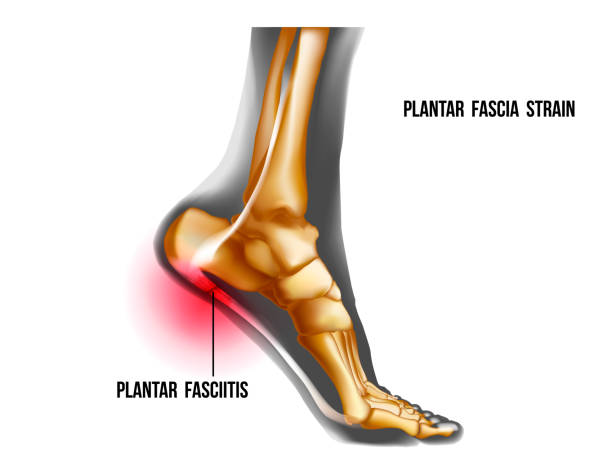
What are the symptoms?
The classic sign is sharp heel pain with your first steps in the morning that eases as you warm up. Typical features include:
- First-step pain — sharp pain under the heel when getting out of bed or standing after rest
- Pain that eases with movement but returns after long periods on your feet
- Tenderness at the inner side of the heel where the fascia attaches
- Worse after — not during — exercise, and after prolonged standing
- Tight calves and Achilles which often accompany and contribute to the problem
What causes it, and who gets it?
Plantar fasciitis develops when the load on the fascia exceeds what it can comfortably handle. Common contributors include a rapid increase in running or walking, prolonged standing at work, tight calf muscles, unsupportive footwear, and changes in foot mechanics. It is common in runners and in people whose jobs keep them on their feet, and it becomes more likely with age as the tissue loses some of its natural elasticity. Often several factors combine — which is why the most effective plans address more than one at once.
How is it diagnosed?
Plantar fasciitis is usually diagnosed from the history and examination, and ultrasound confirms it and reveals the stage. The pattern of first-step pain and tenderness at the heel attachment is highly characteristic. Ultrasound lets us measure the thickness of the plantar fascia and see the tissue changes directly, which distinguishes simple irritation from more established fasciosis and rules out other causes of heel pain. Seeing the tissue means the treatment is matched to exactly what is going on.
How is plantar fasciitis treated?
The foundation is a structured loading and stretching programme, with highly effective add-on treatments available when heel pain is stubborn. At Triaxis the options include:
- Calf and fascia stretching, and progressive loading — the evidence-based foundation that resolves most cases
- Footwear advice and orthotics — supporting the arch and offloading the heel
- Shockwave therapy — one of the best-supported treatments for chronic plantar fasciitis, stimulating repair without needles or downtime
- Ultrasound-guided injections — precisely placed to settle stubborn pain, including PRP to stimulate tissue repair in long-standing cases
- Ultrasonic tenotomy (Tenex) — minimally invasive removal of degenerated tissue for the most persistent cases
Because these options build on one another, the plan starts with the least invasive measures that work and steps up only if needed — always matched to the stage of your tissue on ultrasound.
Why has my heel pain not settled?
When plantar fasciitis lingers, it is usually because the tissue has moved from simple irritation to a degenerative stage that needs active repair, not just rest. At this point, treatments that stimulate healing — shockwave, PRP, or removal of the damaged tissue — tend to work far better than continued rest or painkillers alone. This is exactly what the ultrasound scan clarifies, so stubborn heel pain gets the treatment that actually matches its stage rather than more of what has not been working.
Can I avoid surgery?
The overwhelming majority of plantar fasciitis is resolved without surgery. Surgery for plantar fasciitis is uncommon and reserved for the small number of cases that do not respond to a full course of non-surgical care. With the modern range of options — loading programmes, shockwave, guided injections and minimally invasive tissue treatments — most people get back to comfortable walking and running without an operation. A second opinion with a diagnostic ultrasound scan helps you understand the full menu before considering anything invasive.
Why choose Triaxis for heel pain?
You are assessed, scanned and treated by a sports and musculoskeletal medicine specialist who offers the complete range of plantar fasciitis treatments under one roof. Dr Dinesh Sirisena is the author of the Elsevier textbook Ultrasound-Guided Musculoskeletal Procedures in Sports Medicine (2021) and brings experience from elite sport, where getting athletes back on their feet quickly is the whole job. You see the state of your fascia on the screen, understand why the pain has persisted, and get a plan built around the stage of your tissue.
Heel pain first thing in the morning?
Book a consultation with Dr Dinesh Sirisena for a diagnostic ultrasound scan and a clear, staged plan — starting with the least invasive treatments that work.
WhatsApp: +65 8889 3594 Email: hello@triaxisclinic.com
Clinic: Triaxis Sports & Joint Clinic, Farrer Park Hospital, #07-16, Singapore
Frequently asked questions about plantar fasciitis
Why is the pain worst in the morning?
Overnight the fascia tightens while you rest, so the first steps stretch it suddenly and sharply. The pain typically eases as the tissue warms up and loosens with movement.
How long does plantar fasciitis take to get better?
Many cases improve over a few months with a consistent loading and stretching programme. Stubborn cases resolve faster when add-on treatments such as shockwave are matched to the stage of the tissue.
Is shockwave therapy effective for heel pain?
Yes — chronic plantar fasciitis is one of the strongest indications for shockwave, with good trial evidence for reducing heel pain and improving function. It is non-invasive and needs no downtime.
Do I need orthotics?
They help many people by supporting the arch and offloading the heel, and are a useful part of the plan. Whether you need them, and which type, depends on your foot mechanics and is assessed at consultation.
Is it caused by a heel spur?
No. Heel spurs are common and usually incidental — the pain comes from the irritated fascia, not the spur. This is why treatment targets the fascia rather than the spur.
Should I stop running completely?
Not usually. Complete rest often makes tissue weaker. A graded loading programme that adjusts your running rather than stopping it entirely tends to give the best and most durable result.
When would PRP or Tenex be considered?
For long-standing cases where the tissue has become degenerative. PRP stimulates repair; ultrasonic tenotomy removes the damaged tissue. Your ultrasound findings guide when these add value.
Can both heels be treated?
Yes. Plantar fasciitis can affect both feet, and both can be assessed and treated. The plan is tailored to how each heel responds.