
Shoulder Pain: Causes, Symptoms and Treatment Options
Shoulder Pain, Written and medically reviewed by Dr Dinesh Sirisena · Consultant in Sports, Exercise & Musculoskeletal Medicine · Triaxis Sports & Joint Clinic
In short: Shoulder pain is very common and usually improves without surgery. Because the shoulder is so mobile, many different structures — the tendons, the joint capsule, the labrum or the joint itself — can cause similar symptoms, so identifying the source matters. Most causes respond well to a guided programme and, where helpful, minimally invasive image-guided treatment.
Key points at a glance
- The shoulder’s large range of movement makes it prone to several treatable conditions.
- Most shoulder pain improves without surgery.
- Where the pain sits often hints at the cause (see the table below).
- Sports ultrasound can assess the tendons and joint during movement and guide treatment.
- A few warning signs need urgent attention (below).
When shoulder or arm pain is an emergency
Seek emergency care if shoulder, arm or upper-body pain comes on with chest tightness or pressure, breathlessness, sweating, nausea, or pain spreading to the jaw or down the arm — these can be signs of a heart problem rather than a muscle or joint issue. Also seek prompt care after a significant injury with deformity, or if you cannot move the arm at all.
Why does my shoulder hurt?
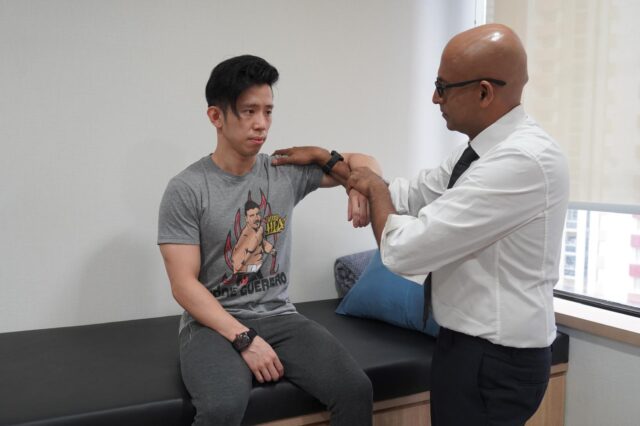
Shoulder pain develops when the tendons, joint capsule, labrum or joint surfaces become overloaded, irritated or injured. Sometimes it follows a specific event; often it builds gradually without a clear injury.
- Repetitive overhead activity
- Sport
- Heavy lifting
- Falls
- Workplace activities
- Age-related changes
- Previous shoulder injuries
What are the common causes of shoulder pain?
A handful of common, treatable conditions account for most shoulder pain. Identifying which one you have guides the right treatment.
- Rotator cuff conditions — tendinopathy or tears
- Frozen shoulder (adhesive capsulitis)
- Subacromial pain, sometimes called “impingement”
- Biceps tendinopathy
- Labral injury
- Shoulder instability
- Shoulder arthritis
Each of these is covered in more detail on its own page.
What does shoulder pain feel like, and where is it felt?
Shoulder pain can be a dull ache, sharp pain on certain movements, or increasing stiffness. Where it sits often points to the structures involved.
| Where the pain is | What it may involve |
| Front of the shoulder | Biceps tendon or the shoulder joint |
| Outer shoulder | Rotator cuff or subacromial pain |
| Top of the shoulder | The AC (acromioclavicular) joint |
| Back of the shoulder | Muscular or throwing-related causes |
| Into the upper arm | Referred from the shoulder (not the elbow) |
Pain that travels below the elbow, or comes with numbness or tingling, may point to the neck or a nerve rather than the shoulder itself.
Do I need a scan for shoulder pain?
Not always. Shoulder pain is usually assessed from your symptoms and examination, with imaging used selectively. Sports ultrasound is particularly useful for looking at the tendons and bursa during movement, and can also guide treatment.
MRI may be considered when more detail about deeper structures is needed.
What are the best treatments for shoulder pain?
Most shoulder pain is treated without surgery, using a complete programme of guided rehabilitation and, where helpful, minimally invasive image-guided injections. The right plan depends on the specific diagnosis.
- Activity modification
- A guided mobility and strengthening programme
- Education about shoulder movement
- Image-guided corticosteroid or PRP injections where appropriate
- Shockwave therapy or barbotage (ultrasound-guided needling) for calcific tendinopathy where appropriate
- Percutaneous ultrasonic tenotomy (Tenex) for selected tendon problems, including calcific rotator cuff tendinopathy
- Nerve hydrodissection where a nerve is compressed around the shoulder or neck
- Hydrodilatation for frozen shoulder
- Sports ultrasound assessment to confirm the diagnosis and guide treatment

Do I need surgery for shoulder pain?
Surgery is not needed for most shoulder pain. The majority of conditions improve with non-surgical care, and surgery is reserved for specific problems — such as certain traumatic tears or recurrent instability — rather than shoulder pain in general.
Can shoulder pain improve over time, and how long does it take?
Many shoulder conditions improve with the right programme, although the timeline depends on the diagnosis — some settle within weeks, while others, such as frozen shoulder, take longer.
When should I see a doctor for shoulder pain?
Seek assessment if shoulder pain lasts several weeks, limits movement, disturbs sleep, or follows an injury. Seek urgent care for the warning signs above.
- Pain lasting several weeks
- Increasingly restricted movement
- Pain interfering with work or sport
- Disturbed sleep
- Developing weakness
- Pain following a fall or injury
- No improvement with self-management
Frequently asked questions
Why does my shoulder hurt at night?
Night pain is common with rotator cuff problems and frozen shoulder; effective treatment usually improves sleep as the shoulder settles.
Can shoulder pain come from the neck?
Yes. Pain spreading below the elbow, or with tingling, may actually originate in the neck.
Will shoulder pain go away on its own?
Many cases improve, but persistent or worsening pain is worth assessing so the right treatment can start.
Does shoulder pain mean a rotator cuff tear?
Not necessarily. Several conditions cause similar pain, which is why assessment matters.
Assessment at Triaxis Sports & Joint Clinic
Triaxis Sports & Joint Clinic provides assessment for a wide range of musculoskeletal and sports conditions affecting the shoulder, elbow, spine, hip, knee, ankle and other joints. Assessment focuses on understanding your symptoms, functional limitations, activity needs, medical history and goals.
Depending on the clinical findings, assessment may include movement analysis, a musculoskeletal examination, sports ultrasound where appropriate, and a discussion of suitable treatment options. Patient education and shared decision-making are central to the consultation, so you can understand your condition and the care options available to you.
Shoulder pain affecting your sleep, sport or daily life?
Most shoulder pain improves without surgery. Dr Sirisena offers assessment, sports ultrasound and minimally invasive, non-surgical treatment tailored to the cause.
Triaxis Sports & Joint Clinic, Farrer Park Hospital · WhatsApp +65 8889 3594 · hello@triaxisclinic.sg · Repair · Restore · Reclaim
About the author
Written and medically reviewed by Dr Dinesh Sirisena, Consultant in Sports, Exercise & Musculoskeletal Medicine, and author of Ultrasound-Guided Musculoskeletal Procedures in Sports Medicine (Elsevier, 2021). Dr Sirisena focuses on the non-surgical and image-guided treatment of musculoskeletal and sports injuries.