Prolotherapy: Uses, Evidence, Risks and What to Expect
Written and medically reviewed by
Dr Dinesh Sirisena
Consultant in Sports, Exercise & Musculoskeletal Medicine
Triaxis Sports & Joint Clinic
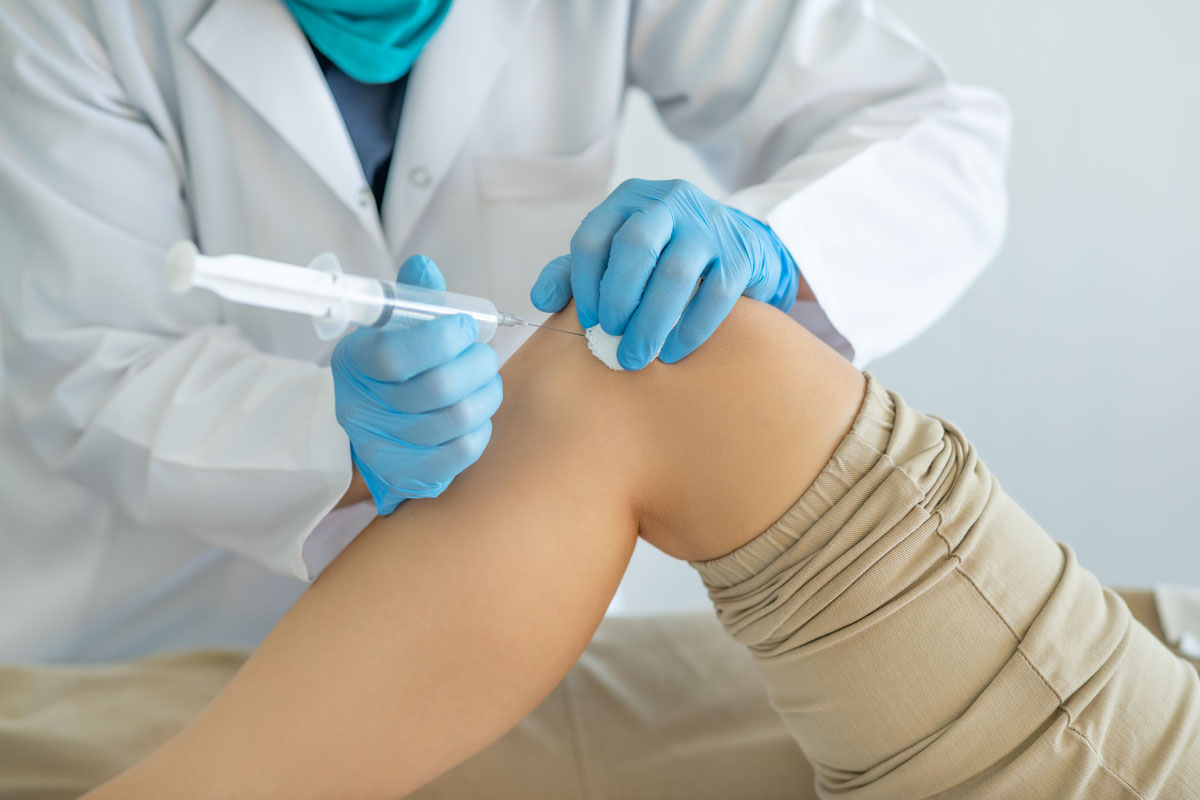
Prolotherapy is an injection-based procedure in which a solution, commonly containing dextrose, is injected into or around selected musculoskeletal structures. It has been studied for conditions including some tendon problems, plantar fasciitis and osteoarthritis. Prolotherapy is not appropriate for every patient and should only be considered after clinical assessment alongside other management options.
What is prolotherapy?
Prolotherapy is an injection-based procedure used in some areas of musculoskeletal medicine. It commonly involves injecting a dextrose-containing solution into or around a selected joint, tendon-related structure, ligament or other musculoskeletal tissue. It has been studied for several painful musculoskeletal conditions, although the strength of evidence differs substantially between conditions.
The term is used for different injection techniques and concentrations. This is important because prolotherapy research is not based on one standardised treatment protocol.
Because prolotherapy can be delivered in different ways, the details of treatment matter. Studies have varied in factors such as:
- Dextrose concentration
- Injection technique
- Number of injections
- Treatment intervals
- Anatomical targets
- Additional treatments
- Comparison treatments
For patients, this means treatment works best when it is tailored to your specific condition by an experienced clinician, rather than applied in the same way to everyone.
How is prolotherapy thought to work?
Prolotherapy is proposed to influence local biological and pain-related processes after a solution such as dextrose is injected into selected tissues.
Various biological mechanisms have been proposed in research, including local cellular responses and effects on pain signalling.
However, a proposed biological mechanism is different from demonstrating that damaged tissue has regenerated in a patient.
What is injected during prolotherapy?
Dextrose, a form of glucose, is one of the most commonly studied solutions used in prolotherapy. Different studies have used different concentrations, volumes, injection locations and treatment schedules. This means treatment can be tailored to your specific condition rather than following a one-size-fits-all approach.
The solution used and where it is placed depend on the clinical situation.
Before any injection procedure, relevant factors may include:
- Diagnosis
- Medical history
- Allergies
- Current medications
- Anatomical structure involved
- Previous treatment
- Potential risks
- Alternative management options
Patients should understand what is being injected and why a particular procedure is being considered.
What conditions has prolotherapy been studied for?
Dextrose prolotherapy has been studied for several musculoskeletal conditions, including knee osteoarthritis, plantar fasciitis and other foot pain, some tendon-related disorders, and selected spinal or joint conditions.
Research has included conditions such as:
- Knee osteoarthritis
- Plantar fasciitis
- Selected tendon conditions
- Rotator cuff disorders
- Certain forms of chronic back pain
- Sacroiliac joint-related pain
- Temporomandibular joint disorders
Importantly, evidence should be evaluated condition by condition by an experienced clinician.
Does prolotherapy actually work?
Many patients experience meaningful improvements in pain and function following prolotherapy, and it has been studied across a range of musculoskeletal conditions. How well it works depends on the specific condition being treated, which is why the best results come from an accurate diagnosis and a treatment plan tailored to you.
A recent 2026 evidence review identified five systematic reviews of dextrose prolotherapy for acute or chronic musculoskeletal conditions.
For knee osteoarthritis, research is still developing and results have been more variable, so prolotherapy works best as one part of a wider plan that also includes exercise, strengthening and, where relevant, weight management.
For plantar fasciitis and other foot pain, studies have shown improvements in pain, and prolotherapy can be a helpful option to consider.
As research in this area continues to grow, treatment is matched carefully to each person’s diagnosis to give the best chance of a good outcome.
Your clinician can explain what the current evidence means for your particular situation, so the plan is right for you.
Can prolotherapy help knee osteoarthritis?
Prolotherapy has been studied for knee osteoarthritis, and some studies report improvements in pain or function.
Earlier systematic reviews identified possible benefits for pain and function.
More recent assessments have been more measured, and the evidence continues to evolve. For this reason, prolotherapy for knee osteoarthritis gives the best results when used as one component of a comprehensive plan — combined with education, exercise, strengthening and other measures — rather than on its own.
As with all treatments, prolotherapy can be considered as part of a wider plan that includes:
- Education
- Appropriate exercise
- Strengthening
- Weight management where relevant
- Activity modification
- Medication where appropriate
- Other procedures where clinically indicated
Can prolotherapy be used for tendon problems?
Prolotherapy has been investigated for several tendon-related conditions, but evidence varies according to the tendon and condition. Prolotherapy can help with pain and function in tendon problems, and it works best hand-in-hand with exercise-based rehabilitation and progressive loading, which are key to restoring a tendon’s full strength.
For example, research has examined dextrose prolotherapy in rotator cuff disorders. A 2025 systematic review and meta-analysis reported improvements in some pain and functional outcomes, but individual studies used different treatment protocols and comparators.
A patient with tendon pain may also require assessment of:
- Training load
- Strength
- Range of movement
- Previous injuries
- Occupational demands
- Sporting technique
- Recovery and rehabilitation
Therefore, an injection should not automatically replace rehabilitation.
Is prolotherapy used for sports injuries?
Prolotherapy may be considered in selected musculoskeletal conditions affecting physically active people. Its use in treatment relies on a collaborative approach, including the correct diagnosis, identifying the affected structure, the impact the condition is having on the individual, and a structured rehabilitation program.
Sports associated with tendon, ligament and joint problems include:
- Running
- Tennis
- Golf
- Badminton
- Football
- Rugby
- Swimming
- Cricket
- Weightlifting
Different injuries require different management.
For example, knee pain in a runner could arise from a tendon, joint, bone or other structure. Establishing the diagnosis is as important as choosing the correct treatment.
Is prolotherapy the same as PRP?
No. Prolotherapy and platelet-rich plasma (PRP) are different injection procedures. Dextrose prolotherapy commonly uses a dextrose-containing solution, while PRP is prepared from a patient’s own blood to produce a platelet-containing preparation. Preparation methods, proposed mechanisms and clinical uses differ between the two procedures.
Neither treatment should be described as universally superior.
A recent evidence assessment of plantar fasciitis found no statistically significant difference between dextrose prolotherapy and PRP for assessed outcomes in the included evidence.
The decision should therefore depend on the individual condition and available evidence.
Is prolotherapy the same as a steroid injection?
No. Prolotherapy and corticosteroid injections involve different substances and treatment approaches. A corticosteroid injection may be considered for selected inflammatory or painful musculoskeletal conditions, whereas dextrose prolotherapy uses a different solution and proposed mechanism. Which option, if either, is appropriate depends on the diagnosis and clinical circumstances.
There is no single injection that is appropriate for every joint or tendon condition.
Before choosing an intervention, a clinician may consider:
- What structure is involved
- Duration of symptoms
- Previous management
- Rehabilitation progress
- Medical conditions
- Potential benefits and risks
- Evidence for the specific diagnosis
- Other conditions such as poorly controlled diabetes or antiplatelet treatments
Do I need an MRI or ultrasound before prolotherapy?
Not everyone being assessed for prolotherapy requires MRI or ultrasound, but imaging may help clinicians confirm a suspected diagnosis or condition. This may in turn guide management plans. X-rays, MRI and musculoskeletal ultrasound each have different roles, and clinical assessment usually comes before deciding which imaging is appropriate.
X-ray may be useful for bones and certain joint changes.
MRI can provide detailed information about deeper soft tissues, cartilage, bone marrow and internal joint structures.
Musculoskeletal ultrasound is a powerful, patient-friendly tool that assesses tendons, ligaments, muscles, joints and superficial nerves in real time, without radiation. Because it is dynamic, it can examine structures as they move, helping to pinpoint the source of pain accurately. It also allows any injection to be guided precisely to the intended target, improving both safety and accuracy.
A scan finding alone should not automatically lead to an injection.
Should prolotherapy be performed with ultrasound guidance?
As far as possible, all intervetions should be undertake with guidance. The advantage of ultrasound guidance, is that it is dynamic, real time and non-irradiating. It helps clinicians ensure that the correct target is treated under direct visualisation.
Ultrasound may allow the clinician to visualise selected:
- Tendons
- Joints
- Ligaments
- Muscles
- Nerves
- Other soft tissues
This can be relevant when an intervention requires a particular anatomical target.
Depending on the individual’s condition and clinical assessment, certain procedures may be considered as part of a broader management plan.
Is prolotherapy painful?
Prolotherapy involves injections, so temporary discomfort may occur during or after the procedure. The experience varies according to the anatomical area, number of injections, technique and individual. Patients should discuss what to expect, potential side effects and aftercare before deciding whether to proceed.
Reported adverse events in studies have generally included temporary injection-related symptoms, but these are generally short-lived and resolve within a few days.
Compared to more interventional procedures, prolotherapy remains relatively safe when undertaken with guidance and in experienced hands.
What are the possible risks of prolotherapy?
As with other injection-based procedures, prolotherapy can involve risks related to needle placement, the injected solution and the anatomical area treated. Possible effects may include temporary pain, soreness, bruising or swelling, while less common complications may depend on the procedure and injection location.
Before treatment, patients should discuss:
- Expected post-injection symptoms
- Infection risk
- Bleeding or bruising
- Medication considerations
- Allergies
- Anatomical risks
- When to seek medical attention
Evidence about the frequency of adverse effects remains limited for many prolotherapy indications.
Therefore, individual risk assessment remains important.
How long does prolotherapy take to work?
Response timelines for prolotherapy depends on a number of factors, including the underlying condition, injection protocol, number of injections undertaken, severity and duration of symptoms, rehabilitation and individual factors.
Research protocols also vary substantially in:
- Number of injections
- Time between treatments
- Dextrose concentration
- Injection location
- Follow-up duration
Progress should instead be assessed through symptoms, movement, function and ability to return to normal activities.
What should I do after prolotherapy?
Aftercare depends on the anatomical area treated, procedure performed and individual’s condition. Temporary changes to exercise or activity may be advised, followed by progressive rehabilitation where appropriate. Patients should follow the specific instructions provided by their clinician rather than relying on a standard recovery schedule.
Rehabilitation may include:
- Activity modification
- Mobility exercises
- Progressive strengthening
- Load management
- Movement retraining
- Sport-specific exercises
- Gradual return to activity
The procedure itself does not automatically restore strength or movement capacity.
For this reason, rehabilitation planning may remain important after an injection.
When should I seek medical attention after prolotherapy?
Patients should follow the aftercare advice given by their clinician following prolotherapy treatment. Clinicians will counsel patients during the consent phase, advising on what to look out for and when to contact them. More urgent medical assessment may be needed if the following unexpected symptoms develop:
- Fever
- Increasing redness
- Marked swelling
- Severe worsening pain
- New numbness or weakness
- Unexpected loss of function
- Feeling significantly unwell
How is prolotherapy considered at Triaxis Sports & Joint Clinic?
Assessment may include:
- Sports Medicine or Musculoskeletal Medicine evaluation
- Medical and injury history
- Physical examination
- Movement and functional assessment
- Review of previous treatment
- Sports ultrasound where appropriate
- Discussion of rehabilitation
- Patient education
- Shared decision-making
Where an injection procedure is considered, patients can discuss its intended role, evidence, potential risks, limitations and alternatives.
Importantly, recent evidence shows that prolotherapy outcomes differ considerably across conditions. Keeping the discussion diagnosis-specific avoids implying that one procedure can treat all musculoskeletal pain.
Frequently Asked Questions About Prolotherapy
Is prolotherapy a regenerative treatment?
The term “regenerative” is sometimes used when discussing prolotherapy, and while the mechanism of action has been studied, the treatment can help with pain and dysfunction arising from musculoskeletal conditions.
Does prolotherapy cure arthritis?
Prolotherapy does not reverse osteoarthritis, but rather it can help with pain and dysfunction associated with the condition. Particuarly where there is joint and ligament instability. It should be considered as part of a wider management plan that involves education, exercise, activity modification and other options depending on the individual’s condition.
How many prolotherapy injections will I need?
Dose and frequency of depends on individual response, rather than a fixed prescribed number. Sometimes, if symptoms are resolving, it maybe appropriate to augment the treatment with a repeat round of prolotherapy. Whether further treatment is appropriate should depend on the diagnosis, response, clinical assessment and available evidence.
Can prolotherapy repair a torn tendon or ligament?
Prolotherapy can help with pain, dysfunction and potentially stimulate some healing of injured structures such as tendons or ligaments. The key is an accurate diagnosis, guided treatment and appropriate protection of the area followed by focused rehabilitation. Clinical assessment and appropriate imaging may be needed to determine whether rehabilitation or further intervention is more appropriate.
Is prolotherapy better than PRP?
Current evidence does not establish prolotherapy as universally better than PRP or vice versa. The choice of treatment may depend on individual tolerance of treatments, together with the experience of the clinician, and other medical conditions that influcne outcomes. Overall, treatment choice should take into consideration all these factors as well as the correct diagnosis.
Can prolotherapy replace rehabilitation?
Usually, an injection does not replace the need to address strength, mobility, load tolerance and movement where these factors are relevant. Rehabilitation remains an important part of managing many tendon, joint and sports-related conditions. If prolotherapy is considered, its role should be discussed within a broader management plan rather than viewed as a standalone treatment.
Is prolotherapy suitable for everyone?
No. Whether prolotherapy is appropriate depends on the diagnosis, medical history, symptoms, previous treatment and the specific condition being treated. Some patients may be better managed with education, exercise or another approach such as PRP or Tenex therapy. Others may require further investigation or specialist assessment. A clinical consultation is therefore needed before deciding whether an injection-based procedure should be considered.
Is prolotherapy safe?
Other than procedure risks, prolotherapy can cause a temporary flare of symptoms, stiffness and swelling in the area treated. As the body is able to break down the injectate, these symptoms usually settle after a few days. Risk is further mitigated by using guidance in the delivery and ensuring that the procedure is done in a clean environment. Therefore, while prolotherapy cannot not be described as risk-free, adverse events should be minimal when undertaken in experienced hands.
About the Author
Dr Dinesh Sirisena is a Consultant in Sports, Exercise & Musculoskeletal Medicine. His clinical work includes the assessment and management of sports injuries and musculoskeletal conditions affecting joints, muscles, tendons, ligaments and related structures.
Medical Disclaimer
This page provides general educational information and does not replace an individual medical consultation. Prolotherapy is not appropriate or required for every musculoskeletal condition. Evidence varies according to the condition being treated. Decisions about investigations, rehabilitation or injection procedures should be based on individual medical history, symptoms and clinical assessment.