Sports Concussion: How Do I Know If It’s Serious, and When Can I Play Again?
In short: A sports concussion a brain injury caused by a knock to the head or body, and most people recover fully within a couple of weeks with the right approach. You do not need to hit your head to get one, and you can have a concussion without losing consciousness. The safe rule simple: if a concussion suspected, stop playing that day and get assessed. Prolonged rest in a dark room no longer advised — a guided, gradual return to activity helps you recover faster.
Key points
- A concussion a brain injury — it should always be taken seriously, even when a scan normal.
- You can be concussed without a direct blow to the head and without blacking out.
- The golden rule “when in doubt, sit them out” — continuing to play risks a more serious injury.
- Most adults recover in around two weeks, and most children and teenagers within about four weeks.
- Strict rest until symptoms disappear outdated — a structured, symptom-guided return to activity now recommended.
- Recovery should be monitored, not guessed — regular reassessment guides each step back to learning and sport, and catches a stalled recovery early.
- A small number of warning signs mean you need emergency care straight away (see the red-flag box below).
| ⚠ Go to A&E immediately if you notice any of these
Call emergency services or go to the nearest hospital if a person with a head injury has any of the following. These can signal a more serious brain injury that needs urgent attention: • Loss of consciousness, or becoming increasingly drowsy or hard to wake • A headache that keeps getting worse • Repeated vomiting • Seizures or fits, or weakness or numbness in the arms or legs • Slurred speech, confusion, or unusual or aggressive behaviour • Double vision, or unequal pupil sizes • Clear fluid or blood coming from the nose or ears, or a suspected neck injury When in doubt, treat it as an emergency. It’salways safer to be checked and reassured than to wait. |
What is a concussion, exactly?
A concussion a mild traumatic brain injury caused by a force to the head, face, neck or body that shakes the brain inside the skull. It temporarily disturbs how the brain works, which is why the symptoms are about function — thinking, balance, vision, mood — rather than something a routine scan usually shows.
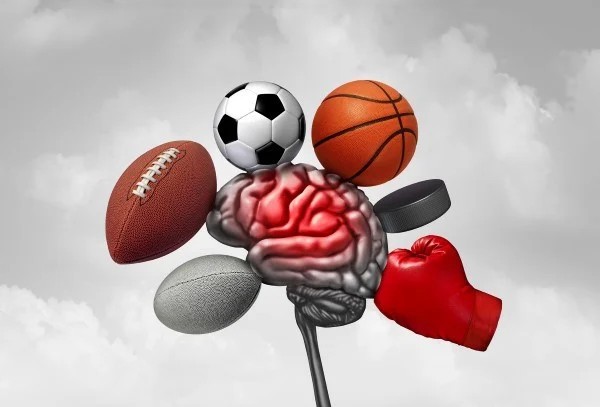
Because the injury one of function rather than structure, a standard CT or MRI scan is often completely normal after a concussion. That does not mean nothing happened. The disturbance at the level of how brain cells communicate, and it is very real — which is exactly why it needs to be respected and managed properly rather than dismissed because “the scan was clear.”
What are the symptoms of a sports concussion?
Symptoms can appear immediately or come on over minutes to hours, and they fall into four groups: physical, thinking (cognitive), emotional, and sleep-related. Headache, dizziness, feeling “in a fog,” and sensitivity to light or noise are among the most common.
Some signs are visible to those around you, while others are only felt by the injured person — which is why teammates, coaches and family have such an important role in spotting them. The table below groups the common ones:
| Physical | Thinking | Emotional | Sleep |
| Headache or pressure | Feeling slowed down | Irritability | Sleeping more |
| Dizziness or balance problems | Feeling “in a fog” | Sadness or low mood | Sleeping less |
| Nausea | Difficulty concentrating | More emotional than usual | Trouble falling asleep |
| Light or noise sensitivity | Memory problems | Nervousness or anxiety | |
| Blurred vision, fatigue | Slow to answer questions |
Important: you do not have to lose consciousness to have a concussion — in fact, most people who are concussed never black out at all.
Should I keep playing if I think I’ve had a concussion?
No. If a concussion is even suspected, the player should be removed from the game or training immediately and not return to play the same day. This the single most important rule in concussion care: when in doubt, sit them out.
Playing on with a concussion dangerous for two reasons. First, your reactions, balance and judgement are impaired, so you are far more likely to be injured again. Second, a second impact before the brain has recovered can, rarely, cause a catastrophic and life-threatening reaction. No single match or training session is worth that risk. A player suspected of concussion should be assessed by a healthcare professional before any thought of returning.
Do I need a scan or to see a doctor?
Most concussions do not need a brain scan, because scans are used to rule out more serious injuries such as bleeding rather than to diagnose concussion itself. However, anyone with a suspected concussion should be assessed by a doctor, and any red-flag symptom means urgent hospital assessment.
A scan (usually a CT) arranged when the clinical picture suggests a risk of something more serious — for example, the red flags listed above, a high-energy injury, or being on blood-thinning medication. For a straightforward concussion, the diagnosis and the recovery plan come from a careful clinical assessment, not from imaging. Seeing a doctor early matters because it confirms the diagnosis, screens for danger signs, and sets you on a structured recovery path from day one.
How is a concussion diagnosed?
A concussion a clinical diagnosis, made by a healthcare professional based on the mechanism of injury, the symptoms, and a structured examination of your memory, concentration, balance and coordination. Standardised tools such as the SCAT6 (used pitch-side and in the early hours) and the SCOAT6 (used in the clinic days later) guide this assessment.
These internationally recognised tools — introduced in the Amsterdam 2023 international consensus on concussion in sport — give a consistent way to document symptoms and track recovery over time. Where a baseline test was done before the season, results can be compared against your own normal. The aim is not a single pass-or-fail score, but a clear picture of how you are recovering and when it is safe to progress.
How long does a sports concussion last?
Most adults recover within about two weeks, and most children and adolescents within about four weeks. A smaller number take longer, and those symptoms that persist beyond this window are called persistent post-concussion symptoms — which are treatable with the right support.
Recovery not always a straight line — you may have good days and setbacks, and that normal. Factors that can lengthen recovery include a history of previous concussions, migraine, anxiety or depression, and doing too much too soon. This is why a guided plan, rather than guesswork, gives the best chance of a smooth recovery. Younger athletes are given more time and a more cautious approach because their brains are still developing.
What’s the best treatment — should I rest in a dark room?
No — the “dark room” approach is out of date. Current best practice is a short period of relative rest for the first 24 to 48 hours, followed by a gradual return to light activity that stays below the level that significantly worsens symptoms. Complete rest until you are symptom-free is no longer recommended and can actually slow recovery.
After the first day or two, gentle activity — light walking, everyday tasks, and later light aerobic exercise — is encouraged, guided by symptoms. A small, tolerable bump in symptoms during activity is acceptable; a large flare means you have done too much and should ease back. Alongside this, protecting sleep, staying hydrated, limiting alcohol, and a staged return to screens, school or work all support recovery. In some cases, targeted rehabilitation — for the neck, the balance system, or vision — speeds things up, which is where a tailored assessment adds real value.
When can I return to sport?
Return to sport follows a graduated, step-by-step protocol, with each stage lasting at least 24 hours and only progressing while you stay symptom-free. Crucially, returning to learning or work comes before returning to full-contact sport — your brain should be ready for the classroom or office before it is ready for the pitch.
The internationally used return-to-sport pathway moves through the following stages. If symptoms return at any step, you drop back to the previous stage and try again after a further rest period:
| Stage | What you do | Goal |
| 1. Symptom-limited activity | Daily activities that don’t provoke symptoms | Gradual reintroduction of routine |
| 2. Light aerobic exercise | Walking or stationary cycling at easy pace | Increase heart rate gently |
| 3. Sport-specific exercise | Running or skating drills, no head impact | Add movement, no contact risk |
| 4. Non-contact training | Harder drills, may start resistance training | Coordination and thinking under load |
| 5. Full-contact practice | Normal training after medical clearance | Restore confidence, assess readiness |
| 6. Return to sport | Normal game play | Full return |
Full-contact practice (stage 5) should only begin after medical clearance. For children and adolescents, the approach is deliberately more conservative, and no young athlete should return to play on the same day as the injury.
Why is regular assessment important through recovery and return to play?
Because concussion recovery changes from day to day, and every step back towards learning, work and sport should be guided rather than guessed. Regular reassessment confirms you are genuinely ready before you progress, adjusts the plan if recovery stalls, and is the safest way to avoid returning too soon.
A single assessment on the day of injury is rarely enough. Symptoms, balance, thinking and your tolerance for activity all shift over the following days and weeks, so recovery is best tracked over time — with repeated reviews — rather than judged from one snapshot. Serial assessments check that you truly symptom-free at each stage before moving up, keep the return-to-play and return-to-learn steps in the right order, and catch a slow or stalled recovery early, so that targeted treatment for the neck, balance system or vision can begin without delay.
This ongoing guidance matters most for those at highest risk of a bumpy recovery — children and adolescents, and anyone with previous concussions or symptoms that are persisting. Having a clinician steer each stage is often the difference between a smooth, confident return and a stop-start one. It is also where an experienced second opinion adds the most value: making sure you return at the right time — not so early that you risk a setback, and not held back longer than you need to be.
What happens if my symptoms don’t go away?
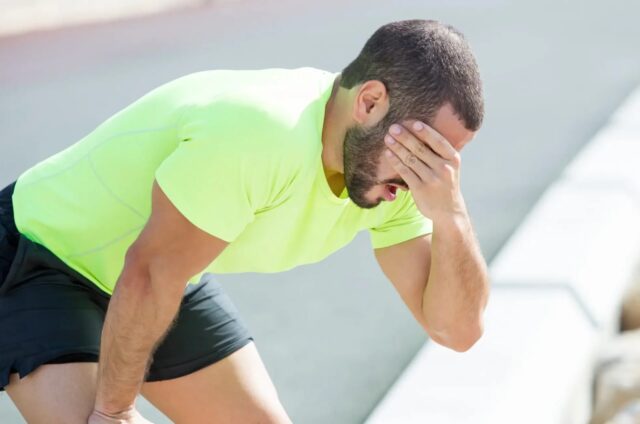
If symptoms last beyond the usual recovery window — roughly two weeks in adults or four in youth — this is called persistent post-concussion symptoms, and it is treatable. It is rarely a sign of lasting brain damage; more often it reflects treatable problems such as neck injury, disturbance of the balance system, visual issues, poor sleep, or mood changes that can be specifically targeted.
A structured assessment can tease apart what is actually driving ongoing symptoms, so treatment aimed at the right cause rather than simply waiting and hoping.
This include a supervised sub-symptom-threshold exercise programme, cervical (neck) physiotherapy, vestibular and visual rehabilitation, support for sleep and mood. The great majority of people with persistent symptoms improve with the right, individualised programme.
What about repeated concussions and long-term risk?
Repeated concussions — especially when an athlete returns before fully recovering — are associated with longer recovery and possible longer-term effects on brain health. This a genuine concern that deserves honesty, but it should be kept in perspective and managed sensibly rather than feared.
The relationship between repeated head impacts in sport and long-term conditions an area of active research, and the science is still evolving.
What’s clear and practical: managing each concussion properly, allowing full recovery before returning, and getting good advice after multiple concussions are the things within your control. For athletes with a history of several concussions, a careful individual discussion — weighing the benefits of sport against the risks — far more useful than a blanket rule.
How can I reduce my risk of concussion?
You cannot eliminate the risk in contact sport, but you can lower it: learn and use correct technique, follow the rules designed to protect the head, build neck and shoulder strength, and use appropriate, well-fitted protective equipment where the evidence supports it.
Evidence-based measures vary by sport — examples include mouthguard use, rules against bodychecking in youth ice hockey, and neuromuscular training programmes in sports such as rugby.
Just as important a culture where players feel able to report symptoms rather than hide them, and where “when in doubt, sit them out” genuinely followed. Prevention and honest reporting protect careers far more than playing through a head injury ever could.
Frequently asked questions
Can I sleep after a concussion?
Yes. The old advice to keep someone awake a myth. Rest and sleep help recovery. The important thing that a responsible adult can check on the person and knows the red-flag symptoms that would mean seeking urgent care.
Can you have a concussion without hitting your head?
Yes. A concussion can result from a force transmitted to the head through the body — for example, a heavy tackle or whiplash-type movement — without any direct blow to the head.
Can you have a concussion without losing consciousness?
Yes, and this the most common situation. The large majority of concussions happen without any loss of consciousness, so never use “they didn’t black out” to rule a concussion in or out.
Is it safe to return to play on the same day?
No. Any athlete with a suspected concussion should not return to play that day. This especially firm for children and adolescents, who are managed more cautiously.
Do I need follow-up appointments after a concussion?
Yes. A single check rarely enough, because symptoms and your readiness for activity change over the days and weeks after injury. Regular reassessment through recovery and the return-to-play stages the safest way to progress and to pick up any problems early.
How do I know when my concussion has healed?
When you have returned to your normal activities, learning or work without symptoms, and have progressed through the return-to-sport stages symptom-free. A healthcare professional can confirm you are ready for full contact.
Worried about a concussion — or when it’s safe to play again?Concussion recovery isn’t a one-off check — it needs regular assessment and guidance through every stage of getting back to learning, work and sport. Dr Sirisena brings experience from elite and international sport to concussion assessment, serial monitoring through recovery, structured return-to-play and return-to-learn planning, and rehabilitation for symptoms that persist. Triaxis Sports & Joint Clinic, Farrer Park Hospital · WhatsApp +65 8889 3594 · hello@triaxisclinic.com · Repair · Restore · Reclaim |
About the author
Written and medically reviewed by Dr Dinesh Sirisena, Consultant in Sports, Exercise & Musculoskeletal Medicine, and author of Ultrasound-Guided Musculoskeletal Procedures in Sports Medicine (Elsevier, 2021). Dr Sirisena cared for athletes at the highest level, including Olympic and international competition, and focuses on evidence-based, patient-centred sports medicine.