Not All ACLs Need an Operation
| In short: For years, a torn ACL meant an automatic operation. That is no longer true. Many people return to an active life through structured rehabilitation, and we now know the ACL can sometimes heal itself when the torn ends are held close together — the idea behind the Cross Bracing Protocol. These options are not right for everyone, and surgery remains the best choice for many, especially high-level pivoting athletes. The key is an early, expert assessment so you understand all your options before deciding. |
Key points
- A torn ACL does not always need surgery — many people do well with structured rehabilitation.
- We now know a ruptured ACL can sometimes heal, if the torn ends are kept close together early after injury.
- The Cross Bracing Protocol (CBP) is a newer, non-surgical option that uses a brace to encourage the ACL to heal.
- CBP is promising but still an emerging treatment — it suits selected patients, carries real risks (including blood clots), and the evidence is still developing.
- Surgery is still the right choice for many people, particularly athletes returning to pivoting sports.
- Timing matters. The non-surgical healing options work best when started early, so getting assessed quickly after injury protects your choices.
- PRP can support healing in partial ACL tears, and can aid graft healing after reconstruction — a biological option many active people ask about.
⚠ An important safety noteAny treatment that involves a period in a brace or reduced movement — including the Cross Bracing Protocol — carries a risk of blood clots in the leg (deep vein thrombosis). This risk must be assessed and actively managed by your medical team. Seek urgent medical care for a hot, swollen, painful calf, or for chest pain or breathlessness. |
Does a torn ACL always need surgery?
No. While surgery (ACL reconstruction) is an excellent and often necessary treatment, it is not automatic. A large body of research shows that many people recover well with a structured rehabilitation programme, and some avoid surgery altogether while returning to sport and active life.
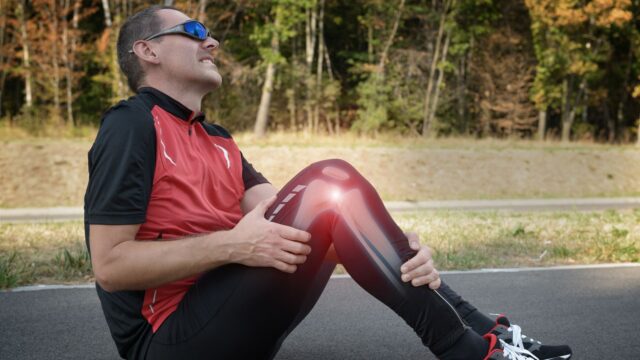
The ACL is a key stabilising ligament of the knee, and a tear can cause the knee to give way, especially during twisting and pivoting. For some people — particularly those in high-demand cutting and pivoting sports — reconstruction gives the most reliable stability. For others, the right rehabilitation restores strength, control and confidence without an operation. The best decision depends on your knee, your goals, and increasingly on what your MRI shows early after injury.
Can a torn ACL actually heal on its own?
Yes — in some cases. The long-held belief that the ACL can never heal has been challenged by recent research. When the torn ends stay close together and the knee is protected early, the ligament can show genuine signs of healing on MRI.
This shift came partly from re-examining older trials, where a proportion of people managed with rehabilitation alone showed evidence of ACL healing on later scans — and those who healed often reported good knee function and quality of life. The insight is simple but powerful: like other tissues in the body, the ACL may repair itself if the conditions are right. The challenge is creating those conditions reliably, which is exactly what the Cross Bracing Protocol sets out to do.
Identifying the problem early and managing it with the right care can make a significant difference in your comfort and mobility. Moreover, delaying treatment can sometimes lead to longer recovery times.
What is the Cross Bracing Protocol?
The Cross Bracing Protocol (CBP) is a non-surgical treatment for acute ACL rupture that uses a specialised knee brace to hold the knee bent at 90 degrees early on, bringing the torn ends of the ligament close together so they can knit. Over about 12 weeks, the brace gradually allows more movement as healing progresses.
Developed in Australia, the protocol is started soon after injury — typically within a few weeks — and is guided by MRI. In the original published study of 80 patients with acute ACL rupture, a high proportion showed evidence of ACL healing on MRI at three months. That is a striking result, and it has generated enormous interest. It also demands careful interpretation, because CBP is a committed, closely supervised programme, not simply “wearing a brace.”
Does the Cross Bracing Protocol work — what does the evidence say?
The early evidence is genuinely promising for healing on MRI, but it is still emerging and, in some settings, contested. CBP should be seen as a carefully selected option to discuss with a specialist, not a guaranteed replacement for surgery — and definitely not right for everyone.
On the positive side, published work shows high rates of ACL healing on MRI, and researchers have started to identify which injuries on early MRI are most likely to heal. On the cautious side, more recent research in athletes returning to pivoting sports has raised concerns about knees remaining unstable and re-injuring, and a definitive head-to-head trial comparing CBP with surgery is still underway. Long-term outcomes are not yet fully known. In short: exciting, but not settled.
It helps to see the three main paths side by side:
| Option | What it involves | May suit | Key considerations |
| Reconstruction surgery | Operation to rebuild the ACL with a graft, then rehab | Pivoting-sport athletes; unstable knees; failed non-surgical care | Reliable stability; surgical and recovery risks; graft rehab ~9–12 months |
| Rehabilitation alone | Structured, progressive strengthening and control work | Lower-demand goals; some who avoid pivoting sports | Avoids surgery; some later choose surgery if instability persists |
| Cross Bracing Protocol | Brace at 90° then progressive range over ~12 weeks to heal the ACL | Selected acute injuries with favourable MRI features | Emerging; blood-clot risk; strict eligibility and monitoring |
Is the Cross Bracing Protocol right for me? Who is it not for?
CBP suits a specific group: people seen soon after an acute ACL rupture, whose MRI shows features that make healing likely, and who can commit to a demanding 12-week programme with close monitoring. It is not suitable for everyone, and choosing it needs an honest, individual discussion.
It is generally less suitable when the injury is not seen early, when the MRI shows the torn ends are displaced or unlikely to knit, when there are other injuries in the knee that need surgery, or when someone cannot safely tolerate a period of reduced mobility. High-demand pivoting athletes deserve particular caution given recent concerns about instability. This is why an early, expert assessment — including a careful look at your MRI — matters so much: it is the only way to know which category you fall into.

What are the risks of the Cross Bracing Protocol?
The most important risk is a blood clot in the leg (deep vein thrombosis), because the knee is braced and less mobile early on. Other considerations include knee stiffness, the ligament not healing well enough (so surgery is still needed), and the demands of a long, closely supervised programme.
None of these means CBP is unsafe — it means it must be done properly, by a team that screens for clot risk, uses appropriate preventive measures, and monitors you throughout. If healing is incomplete, reconstruction remains available. Understanding these trade-offs upfront is part of making a genuinely informed choice, rather than swapping one default (“always operate”) for another (“never operate”).
Can a PRP injection help my ACL heal?
PRP (platelet-rich plasma) is an exciting, minimally invasive option that uses your own concentrated growth factors to support healing. It is especially promising for partial ACL tears — where the intact fibres give the ligament a natural scaffold to heal on — and it is also used to support graft healing when reconstruction is chosen. It is delivered precisely under image guidance as part of a tailored plan.
For a partial ACL tear, the aim is to help the ligament finish the healing it has already begun. Because a partial tear keeps a proportion of its fibres intact, there is living tissue for PRP’s growth factors to work with, supporting repair alongside a structured rehabilitation programme. Many active people specifically seek PRP for this reason — a biological, needle-based option that works with the body rather than replacing the ligament — and it is a very reasonable thing to explore.
PRP also has a role around ACL surgery, where it can encourage earlier graft healing and ease discomfort in the first months, and it sits naturally alongside healing-focused approaches such as the Cross Bracing Protocol. As with any biological treatment, the best results come when PRP is matched to the right injury and combined with good rehabilitation — exactly the kind of individualised plan worth discussing in person.
What if I play pivoting sports like football or netball?
Be especially careful here. Recent research suggests that, for athletes returning to cutting and pivoting sports, a non-surgically managed knee may be more likely to remain unstable or re-injure than a reconstructed one. For many of these athletes, surgery is still the more dependable route to a stable knee.
That does not automatically rule out non-surgical options — but it does raise the bar for choosing them, and it makes an individualised discussion essential. The right answer weighs your sport, your level, your knee, and how much stability you need to do what you love safely. A blanket rule in either direction does you a disservice.
I’ve just injured my knee — what should I do?
Get assessed early. The non-surgical healing options, including the Cross Bracing Protocol, work best when started soon after injury — typically within a few weeks — so acting quickly protects your full range of choices rather than narrowing them.
An early assessment confirms the diagnosis, arranges the right MRI, and interprets it in the context of your goals — so you can see clearly whether reconstruction, rehabilitation, or a healing-focused protocol is the best fit for you. Even if surgery turns out to be the right path, you will have chosen it knowing the alternatives, rather than by default. That clarity, early on, is one of the most valuable things a sports physician can offer after an ACL injury.
Frequently asked questions
Can a completely torn ACL really heal?
In some cases, yes. Research now shows that a proportion of fully ruptured ACLs can show healing on MRI when the torn ends are held close together and the knee is protected early. It does not happen in everyone, which is why careful selection and monitoring matter.
How long does the Cross Bracing Protocol take?
The braced phase runs over roughly 12 weeks, with the knee starting bent and gradually allowed more movement, followed by a rehabilitation programme. It is a significant commitment that needs close supervision throughout.
How do I find out if I’m a candidate?
Through an early assessment with the right MRI, interpreted alongside your goals and activity level. This determines whether your injury has features that make healing likely, and whether the protocol can be run safely for you.
Does choosing not to have surgery mean I can’t return to sport?
Not necessarily. Many people return to active lives and sport through rehabilitation or healing-focused treatment. For high-demand pivoting sports, though, surgery may offer more reliable stability — this is part of the individual discussion.
Is the Cross Bracing Protocol a guaranteed way to avoid surgery?
No. Some people who start it still need surgery if the ligament does not heal sufficiently. It widens your options; it does not remove the possibility of an operation.
Can PRP help a partial ACL tear?
Yes — this is one of the most worthwhile uses of PRP. Because a partial tear keeps some fibres intact, PRP’s growth factors have living tissue to support, and many active people choose it to help their ligament heal alongside rehabilitation. It is best planned as part of an individualised programme.
| Just injured your ACL — or want a second opinion before surgery?
The days and weeks after an ACL injury are when your options are widest. An early assessment — with the right MRI, interpreted in the context of your sport and goals — lets you understand every path, from reconstruction to rehabilitation to healing-focused protocols, before you commit. Dr Sirisena offers expert, non-surgical-first assessment and clear, honest guidance so you can choose with confidence. Triaxis Sports & Joint Clinic, Farrer Park Hospital · WhatsApp +65 8889 3594 · hello@triaxisclinic.com · Repair · Restore · Reclaim |
About the author
Written and medically reviewed by Dr Dinesh Sirisena, Consultant in Sports, Exercise & Musculoskeletal Medicine, and author of Ultrasound-Guided Musculoskeletal Procedures in Sports Medicine (Elsevier, 2021). Dr Sirisena has cared for athletes at the highest level, including Olympic and international competition, and focuses on evidence-based, non-surgical and image-guided treatment of sports and musculoskeletal injuries.